What ChatGPT and Claude in CarPlay Tell Us About AI's Next Phase
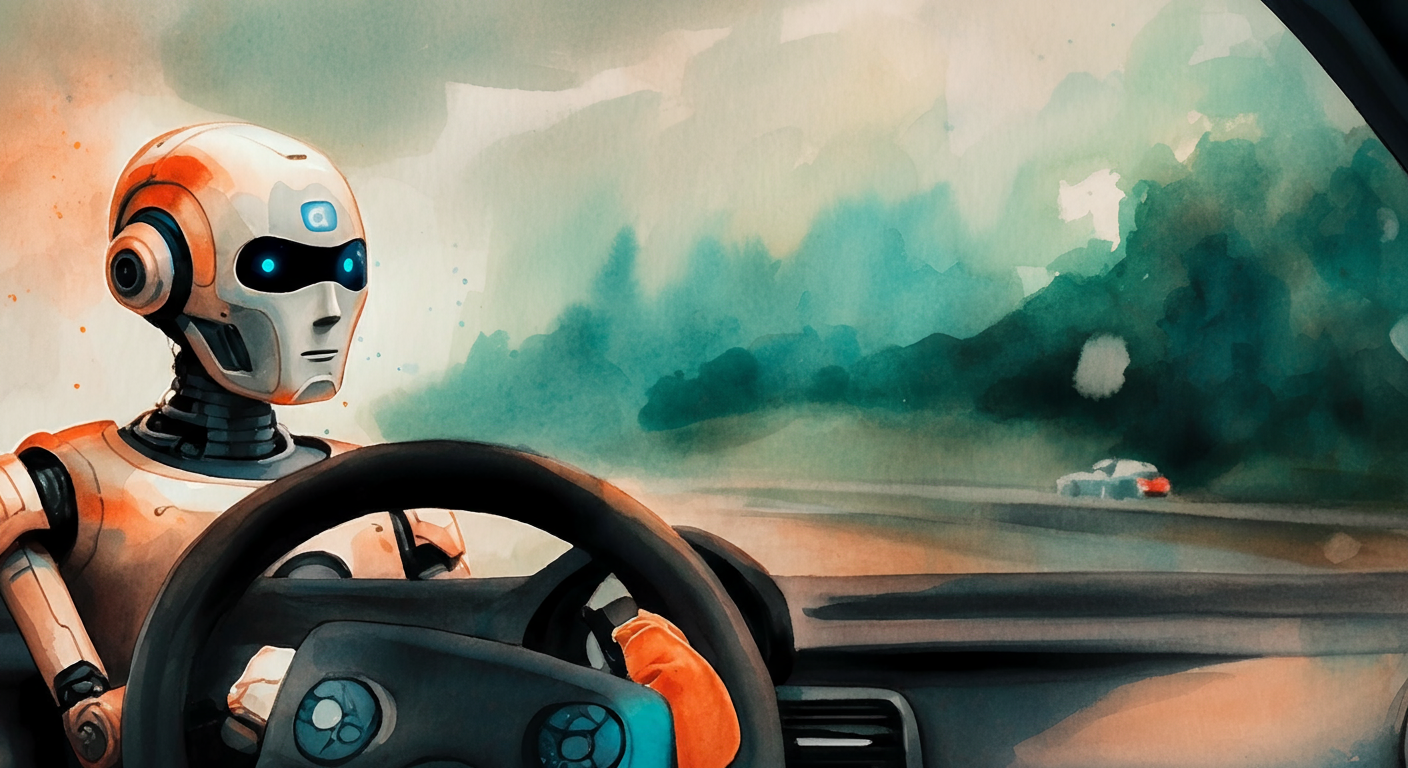
Apple's developer documentation for iOS 26.4 (currently in beta, expected on stable channel this spring) confirmed something the industry has been anticipating for months: ChatGPT, Claude, and Gemini are coming to CarPlay. All three major AI assistants, in your car, simultaneously. That's not a minor feature update. It's a distribution signal worth paying attention to.
What's Actually Shipping
The iOS 26.4 beta includes a new voice control API that lets third-party conversational AI apps operate within CarPlay's interface. Users will be able to open ChatGPT, Claude, or Gemini from their dashboard and interact through a vehicle-optimized voice screen that Apple has designed for the experience.
The constraints deserve careful attention: no wake words (users must manually open the app), no access to vehicle functions, no ability to control iPhone settings. According to MacRumors' coverage of the iOS 26.4 developer guide, Apple is providing a "vehicle-optimized chatbot experience" — but one with clear walls around it. AI assistants can talk to you, but they cannot drive the car.
This is deliberate architecture. Apple is not replacing Siri. It is creating a controlled space for alternatives while keeping its own assistant in the privileged system position.
The Constraints Are the Point
Anyone who has evaluated AI assistants across different form factors knows that the best interactions tend to be narrowly scoped. CarPlay's restrictions effectively solve a problem that plagues AI assistant adoption: scope creep. Strip away file uploads, code interpreters, and long-scroll responses, and what remains is a conversational interface — which is precisely the mode where today's large language models perform most reliably.
What this means in practice: CarPlay may become one of the more effective embedded use cases for AI assistants, not despite the restrictions but because of them. Forced simplicity aligns the technology with what it's actually good at. The manual-open requirement also steers toward passenger use and stationary moments — charging stops, parked environments — where the interaction model makes most sense.
A Distribution Pattern, Not Just a Feature
Apple's CarPlay move isn't happening in isolation. The distribution of AI assistants is shifting from standalone apps toward embedded surfaces across the industry.
Salesforce rebuilt Slack's bot layer as a full LLM-powered agent in January 2026, capable of searching enterprise data and taking action on behalf of employees. Google has embedded Gemini deeply into Workspace, making it the default AI for hundreds of millions of users. OpenAI launched Frontier this month — a platform designed specifically to help enterprises embed AI agents into existing workflows, with HP, Intuit, and Oracle among the first adopters.
The pattern is consistent: the companies controlling the surfaces where people work, communicate, and now drive are integrating AI directly, rather than routing users toward standalone apps. For ChatGPT, Claude, and Gemini, this creates a strategic tension. Embedded distribution is a reach win — it puts the product in front of users who might never open a dedicated app. But the embedding platform controls the user relationship, the interface, and ultimately the data.
The Platform Neutrality Question
Apple's decision to support all three major AI assistants simultaneously is notable, and likely temporary.
Platforms rarely maintain permanent neutrality when economic incentives point elsewhere. The history of default search engine deals illustrates this clearly: Apple reportedly earns somewhere between $18 and $20 billion annually from Google for Safari's search default — figures that have surfaced in antitrust proceedings, though neither company has confirmed them publicly. The same economics apply to AI assistants. As CarPlay usage accumulates and data on user preferences matures, the pressure to select a preferred partner will grow.
Consider the competitive positions. OpenAI has the strongest consumer brand recognition and is the most likely to pursue a preferred-status deal. Google is deeply embedded in Apple's existing revenue structure through search and would resist anything that disadvantages Gemini. Anthropic, smallest of the three by consumer reach, has the most to gain from distribution exposure and the least leverage to negotiate exclusivity.
The early smartphone browser era was similarly neutral — any browser could run on iOS at the outset. That neutrality eroded as the commercial stakes became clear.
What the Usage Data Will Show
When iOS 26.4 ships to stable, the three providers will begin accumulating CarPlay interaction data: which assistant gets opened most often, what categories of tasks users attempt, how often sessions complete versus abandon.
This data matters beyond CarPlay. It will reveal how people want to interact with AI when the interface is stripped to voice and a simple screen — no search, no uploads, no canvas. The results could inform product roadmaps across all platforms. If CarPlay usage concentrates around a narrow set of tasks — navigation context questions, message drafting, quick factual lookups — that's a meaningful signal about where embedded AI delivers real value versus where it's still a novelty.
The chatbot that learns to be useful in 30 seconds on a car dashboard is likely to be better at voice interfaces everywhere else. Constraints are underrated as a product improvement mechanism.
The Forecast
Two developments seem probable before the end of 2026. First, at least one provider will pursue a CarPlay default position deal with Apple. Automotive distribution is too large and too habitual to leave uncontested — people who use a product in their car tend to keep using it.
Second, the experience of designing for CarPlay's constraints will improve voice interface quality broadly. We have seen this pattern before: mobile constraints that initially appeared to be limitations produced better products than their desktop predecessors.
What's worth watching: which provider ships CarPlay-specific updates first after the stable iOS 26.4 release, whether Apple begins surfacing aggregate usage metrics to developers, and whether any of the three starts marketing CarPlay integration in mainstream advertising campaigns. That last signal will tell you who believes they're winning — and in distribution battles, confidence tends to become self-fulfilling.
For context on how the three assistants compare across their core capabilities, see ChatGPT vs Claude vs Gemini: Which AI Assistant Is Best?
Stay in the loop
Get the best chatbot news, reviews, and discoveries — weekly.